
Materials
GLASS TILE
Short memo on the properties of glass tiles
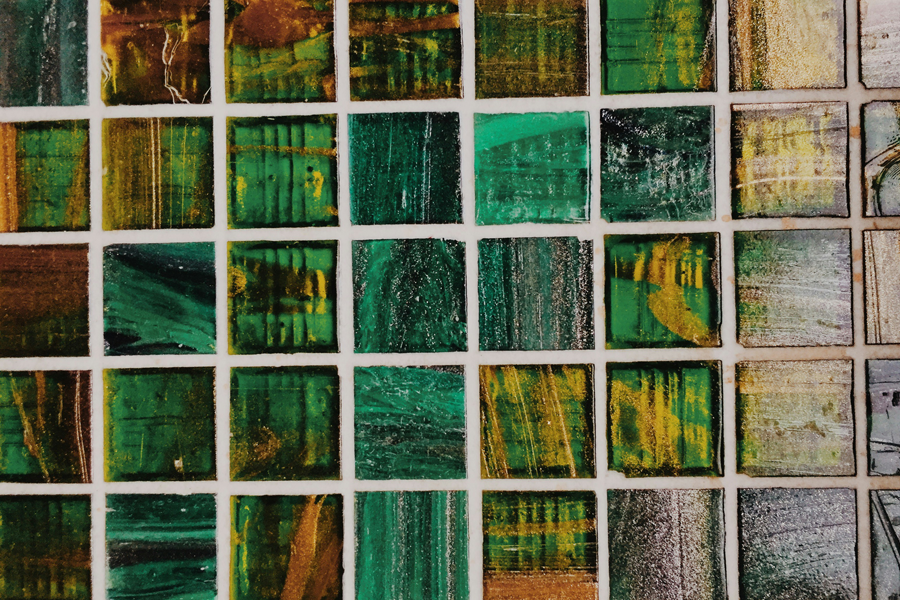
Below is a short memo on the properties of glass tiles.
TEMPERATURE SENSITIVITY. Glass is more sensitive to temperature changes and has a higher expansion coefficient than ceramic or porcelain tiles. Additional movement accommodation, flexible grout, and properly placed expansion joints are therefore essential. Not all glass tiles are suitable for outdoor use, and medium- to large-format glass tiles may be prone to cracking in areas subject to significant temperature changes or constant moisture.
COLOUR OF ADHESIVE. The opacity of the tile affects installation. Transparent or translucent glass tiles may reveal adhesive colour and trowel lines; therefore, the colour of the adhesive becomes an important design consideration. Smooth substrate preparation is also necessary.
REFLECTIVE PROPERTIES. Glass reflects surrounding colours, including grout, making grout selection an important design consideration. Contrasting grout will highlight mosaic patterns but may also expose spacing inconsistencies and sheet lines. This means that glass tiles are highly sensitive to the quality of installation.
RIGID SUBSTRATE REQUIREMENTS. Glass tiles require an especially rigid substrate and should never be bonded directly to timber substrates. Any plaster or mortar must be fully cured, and the use of a decoupling membrane is highly recommended.
ADDITIONAL MATERIAL. Glass is more prone to chipping and breakage during cutting and handling; therefore, extra tiles should always be ordered to allow for wastage and future repairs.
EPOXY ADHESIVE. Some glass tiles, particularly those with metallic backing, may require a specialised epoxy adhesive.
CLEANING AND MAINTENANCE. Glass tiles should be cleaned with a soft, lint-free cloth and a non-abrasive cleaner. Acid-based cleaners, including white vinegar, should be avoided as they may weaken the grout. Mineral build-up in wet areas, such as showers, may require more frequent cleaning.