
Form
Glass Tiles and the Architecture of Light
Why an ancient material still feels contemporary
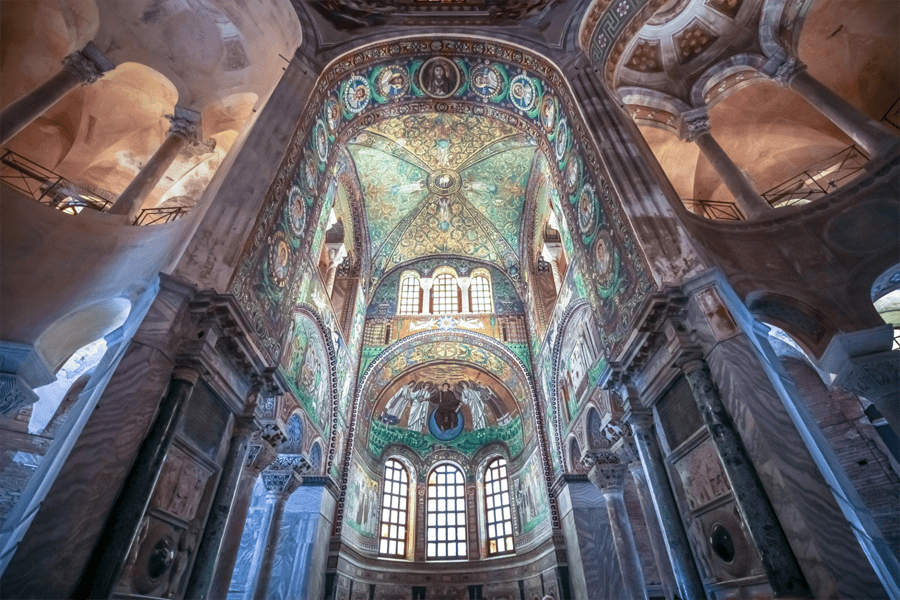
Those who work with glass mosaics today place themselves, knowingly or not, within a tradition more than two thousand years old.
The scale may be smaller and the setting more domestic, but the material is still asked to perform the same task it performed in antiquity: to catch light, hold it briefly, and return it to the eye in ways that stone alone cannot.
Light Made Solid
Glass tiles occupy a curious place in architecture.
They are among the oldest decorative materials still used in modern interiors, yet they often feel surprisingly contemporary.
Long before glass mosaics appeared in kitchens, bathrooms, and swimming pools, they covered the walls and domes of Byzantine churches, where craftsmen used thousands of tiny pieces of coloured glass to create surfaces that seemed to glow from within.

The effect was deliberate. Stone reflects light. Glass captures it, scatters it, and returns it to the eye in constantly changing ways. For centuries, mosaicists used glass not simply because of its colour, but because of its relationship with light.
The Byzantine mosaics of Constantinople, Ravenna, and Thessaloniki were not merely pictures made from small pieces of coloured glass. They were carefully designed surfaces intended to transform architecture itself. Gold tesserae were often set at slightly different angles so that light would scatter across the wall rather than reflect uniformly.
As people moved through the building, the surface appeared to shimmer and change.
More than a thousand years later, the settings have changed. Glass mosaics now appear in kitchens, bathrooms, swimming pools, and contemporary interiors. Yet the material continues to perform the same task. It captures light, alters it, and returns it to the room in constantly changing ways.
A Material Designed for Light
Unlike ceramic or porcelain, glass can simultaneously reflect, transmit, refract, and absorb light.
This means that a glass mosaic rarely appears exactly the same twice. As daylight changes, as lamps are switched on, or as the viewer moves through the room, the surface itself seems to change.
The room feels more alive.
This is one reason glass mosaics are often used as accents rather than large continuous surfaces. A relatively small area can transform the character of an entire room.
Glass possesses several practical advantages. It is impervious to moisture, resistant to staining, and unaffected by ultraviolet light.
At the same time, glass is more sensitive to temperature movement than ceramic or porcelain. It expands and contracts more readily and therefore requires careful installation, flexible materials, and properly designed movement joints.
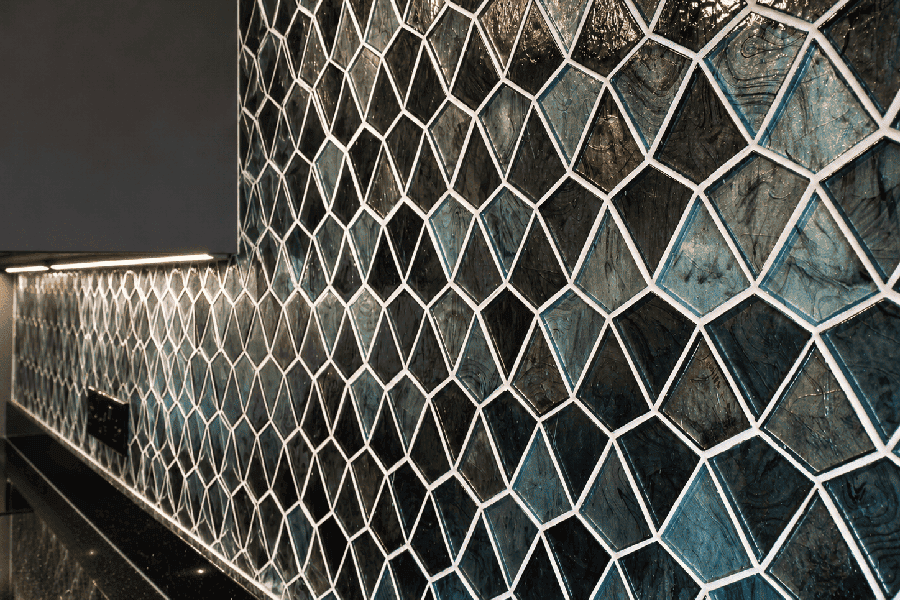
For this reason, when we speak about glass tiles, we are usually speaking about mosaic. Small pieces accommodate movement more easily and place less stress on the material itself.
Glass Is Unusually Honest
Transparent and translucent mosaics may show the colour of the adhesive beneath them. Reflections can emphasise grout lines, sheet lines, and even small inconsistencies in spacing.
The same qualities that make glass beautiful also make poor workmanship easier to see.
For this reason, grout colour, adhesive selection, substrate preparation, and installation quality become important design considerations rather than merely technical details.