
cbcbcx
cbcbc
cbcbcb
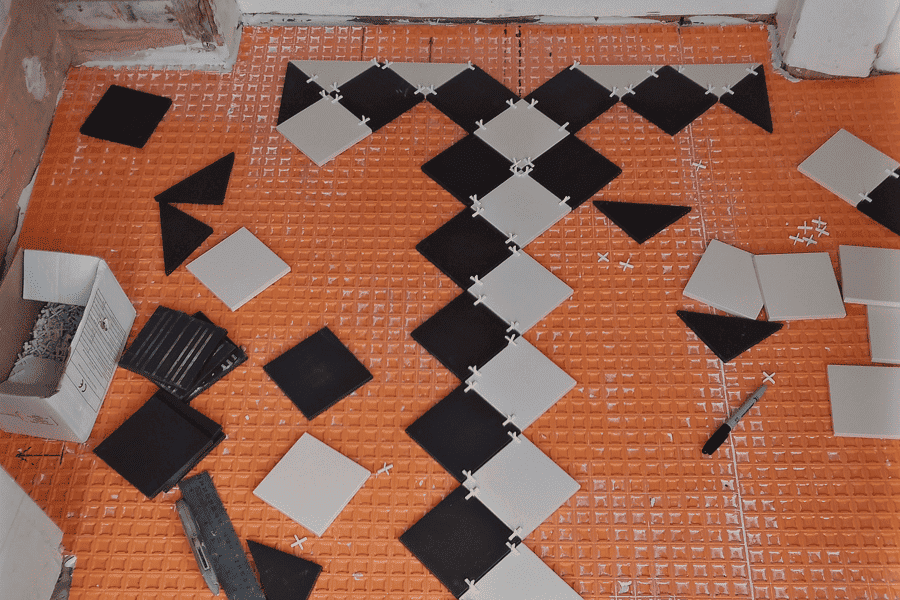
That said, there are certain things that are useful even for non-professionals to understand. These are the points I would like to focus on here.
The primary functions of grout are twofold.
First, it accommodates minor movement that could otherwise lead to cracking. Walls, floors, and tiles expand and contract due to changes in temperature and/or humidity. Grout compensates, to a certain degree, for these small movements.
Second, grout allows installers to adjust tile patterns in order to compensate for slight variations in tile dimensions.
It took tilers some time to realise that if they kept butting tiles together without grout joints, the result would never look good.
Credit: Photo by Freguesia de Estrela on Unsplash
All grouts can generally be divided into three highly uneven categories: cement-based, epoxy-based, and speciality grouts. In roughly 90% of cases, cement-based grouts are used. Epoxy grouts account for approximately 9.9% of applications. Speciality grouts — such as urethane, furan, and various polymer-resin formulations — are used only rarely, and most tilers never use them at all.
The key distinction of epoxy grout is that it is made from epoxy resin combined with a silica filler. Epoxy grout, therefore, is significantly more expensive than cement-based grout, both in material cost and installation. It cures much faster and becomes much harder. Any mistake can be difficult — or sometimes impossible — to correct. Epoxy grout is non-porous; that is, it does not absorb dirt or moisture. It also offers substantially better bond strength and impact resistance.
Overall, epoxy grout is typically used in wet areas and in places that require greater resistance to movement and staining.
This is a wet area so I used epoxy grout.
The most important thing to remember about grout, however, is that it is not merely a technical component, but an element of design capable of dramatically transforming the perception of the final result.
The colour of the grout can completely alter the character of a space. A colour that closely matches the tile creates a calm, continuous appearance, allowing the surface to read almost as a single material. This approach often makes rooms feel larger, cleaner, and more restrained. In my opinion, this is where you should begin.
If you want to emphasise the geometry of the tile layout and draw attention to the pattern itself, consider using a contrasting colour.
Traditional bathroom with dark grout.
Thanks to AI, we can see how this wall would look with light grey grout.
And white.
The same tile can appear modern, traditional, minimalist, or highly decorative depending solely on the grout selected.
Joint size has a similarly powerful effect. Narrow joints tend to create a more refined and seamless appearance, while wider joints introduce rhythm, texture, and a stronger sense of craftsmanship. Even slight adjustments in grout width can influence whether a surface feels delicate and elegant or bold and architectural.
A carefully selected grout colour can conceal minor irregularities and create visual harmony. Conversely, poorly chosen grout can exaggerate imperfections, disrupt proportions, or make even high-quality tile look cheap or out of place.
You should also keep in mind how the tile edge contributes to the final appearance of the work. Joints with bevelled — that is, slightly rounded — edges will remain visible even if the grout perfectly matches the tiles, simply because of the way light reflects off them. Rectified tiles with perfectly square edges, by contrast, can be grouted flush with the surface so that the joints are barely visible at all.
I have seen examples where the grout completely ruined the work — the joints stood out too much, making the overall impression feel intrusive, overly busy, excessively modern, or unnecessarily rustic. More than once, I have had to step in and ask a customer to pause for a moment and reconsider what they were about to do.
The shower on the right looks neat and clean, but the charm has disappeared.
The key point is that grout should not be treated as an afterthought. It deserves the same level of consideration as the tile itself, the layout pattern, lighting, and surrounding materials. The success of a tiled surface depends not on the tile alone, but on the relationship between the tile and the grout.