
Form
The Spaces Between Tiles
How grout shapes what we see

The joints may occupy only a small part of the surface, yet they play a significant role in how we perceive a tiled wall or floor. They define the grid, reveal the geometry, and quietly influence whether a room feels calm or busy.
For something so important, grout is rarely discussed.
Before We Continue
Homeowners, I would hope, do not need to immerse themselves in technical details. Presumably, the people they hire know their craft and carry out their work responsibly. Excessive focus on technicalities can distract from what matters.
That said, there are certain things that are useful to understand.
The primary functions of grout are twofold.
First, it helps accommodate stresses caused by changes in temperature and humidity. Walls, floors, and tiles expand and contract over time. Modern grouts help tiled surfaces tolerate these small movements.
Second, grout allows installers to adjust tile layouts and compensate for slight variations in dimensions. Without joints, even tiny differences in size would quickly accumulate and become obvious.
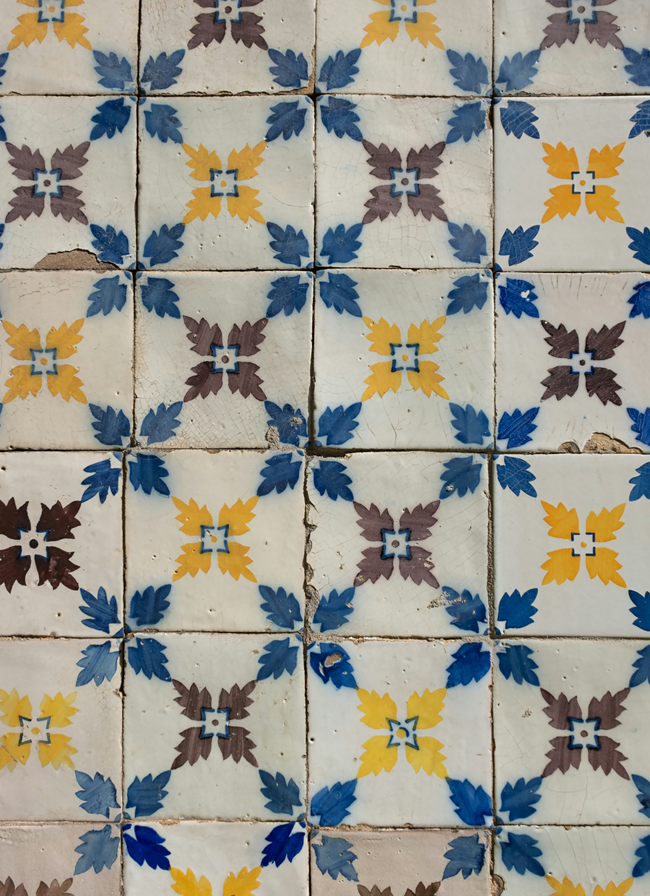
Most grouts fall into four broad categories: cement-based, lime-based, epoxy-based, and speciality formulations.
Cement grout is by far the most common and accounts for the overwhelming majority of installations.
Lime-based grouts are mainly used in historic buildings and restoration work, where breathability is often more important than strength. Because lime allows moisture to move more freely, it can be a better choice for older walls and floors. They have also become popular with some environmentally conscious homeowners.
Epoxy grout is significantly more expensive, both in material cost and installation. It cures much faster and becomes much harder. Any mistake can be difficult — or impossible — to correct. Epoxy grout is non-porous, meaning it does not absorb dirt or moisture. It also offers substantially better bond strength and impact resistance.
For this reason, it is often used in wet areas and other demanding environments.
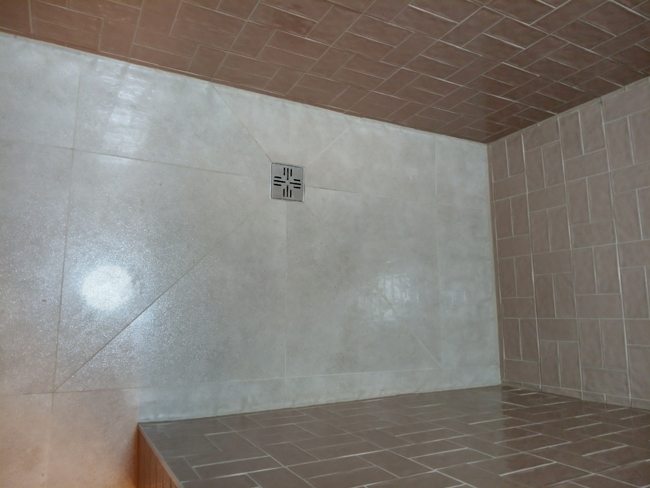
Speciality grouts, such as urethane, furan, and various polymer-resin formulations, are encountered only rarely, and many tilers never use them at all.
Yet the most interesting thing about grout is neither its chemistry nor its strength.
It is the way it shapes what we see.
How Grout Shapes What We See
Without grout, individual tiles would merge into a continuous surface. The joints introduce separation. They create a network of lines that the eye instinctively follows.
We perceive relationships before individual objects. Rather than seeing tiles and grout independently, the eye organises them into larger patterns and structures. What we ultimately perceive is the geometry they create together.
This is where grout begins to matter.
The colour of grout determines how strongly that geometry announces itself.
Matching grout tends to soften the grid and allow neighbouring tiles to merge into larger visual fields. Contrasting grout does the opposite. It emphasises every joint and makes the geometry more explicit.
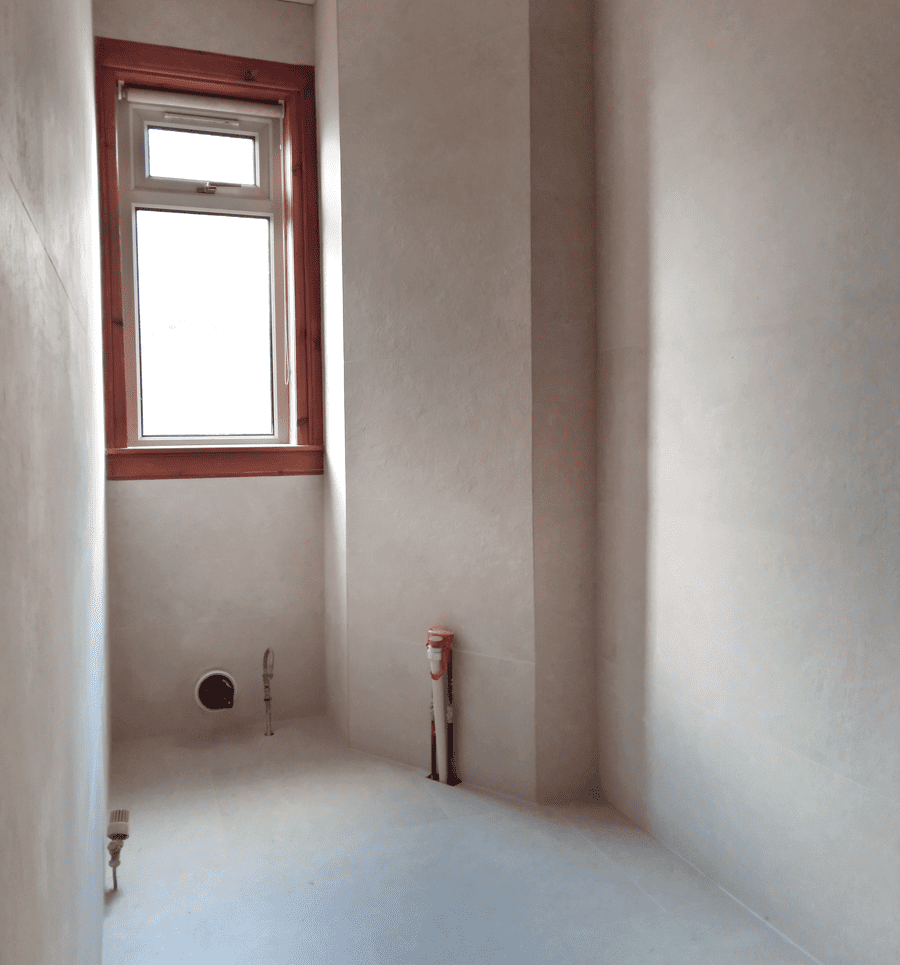
Joint width has a similar effect. Wide joints create stronger visual separation between tiles. Narrow joints allow neighbouring tiles to relate more closely to one another. As joints become wider, the grid becomes more prominent. As they become narrower, the geometry tends to recede.
A white metro tile paired with dark grout reads very differently from the same tile paired with a closely matched joint colour.
The tile has not changed.
The geometry has.
Likewise, a room tiled with large-format porcelain and colour-matched grout may appear almost monolithic, while the same tiles installed with contrasting grout may draw attention to every individual unit.
Neither approach is inherently superior.
A Victorian geometric floor may benefit from visible joints that help define the pattern. A contemporary stone floor may seek visual continuity instead.
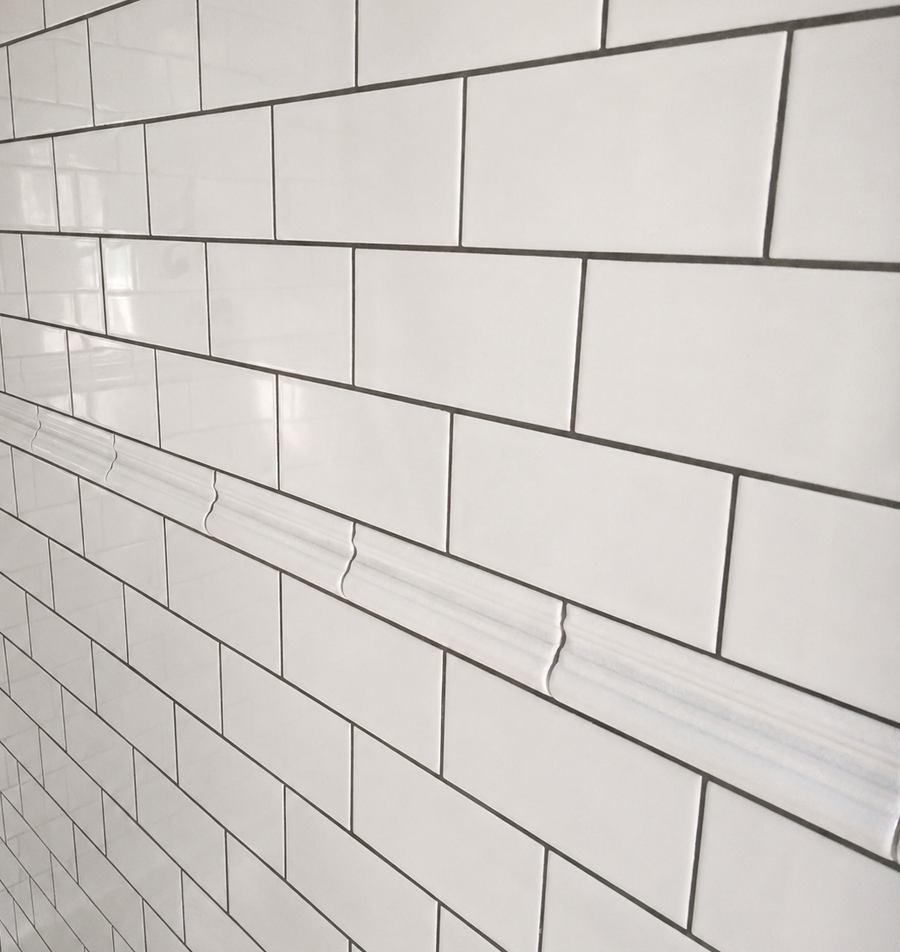
The question is not whether grout should be visible. The question is how visible the geometry should be.
The Quiet Importance of Grout
Grout is often treated as an afterthought.
The tiles are chosen carefully. The layout is discussed at length. Samples are compared under different lighting conditions.
Yet grout influences how the entire installation is perceived.
Its purpose may be practical, but its effect is visual.
It determines whether geometry announces itself or retreats into the background. It can make a surface feel unified or fragmented, calm or energetic.
Perhaps that is why grout matters.
It also reminds us that the spaces between things are often as important as the things themselves.