
Context
Why Cyclopedia?
The Work and the Worker
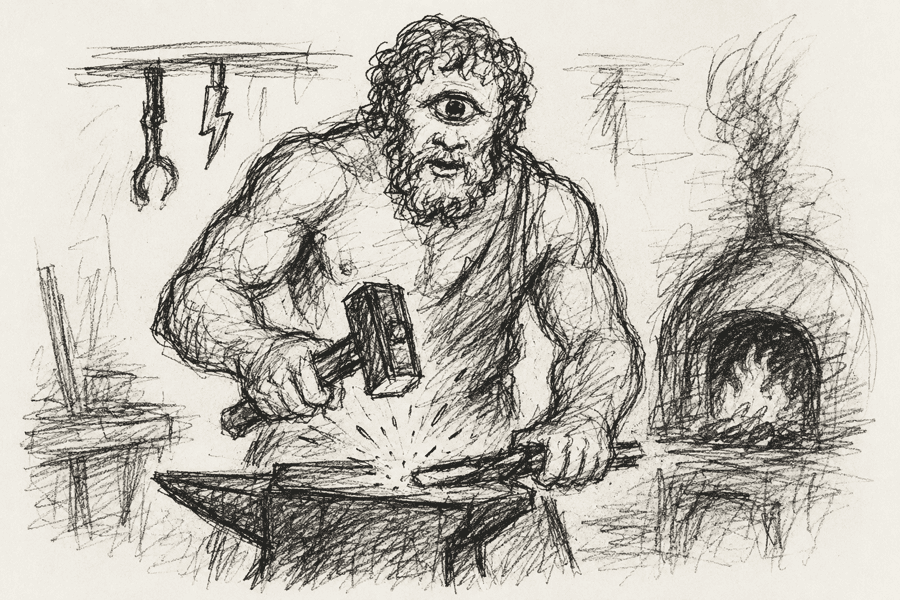
Everything we know about them comes from their enemies: those who feared them, used them, betrayed them, and ultimately killed.
That is why I treat the darker stories about one-eyed giants with a degree of caution.
What we do know is that they were craftsmen. The thunderbolt of Zeus came from their forge. The trident of Poseidon came from their forge. The weapons through which the gods exercised their power first passed through Cyclopean hands.
The detail is easy to miss. The gods ruled the world, but they did not make the tools by which they ruled it. Someone else did.
Those who make things have always stood close to power without sharing it. They build the palace but do not live in it. They carve the monument but their names are left off the inscription. They create the object that everyone sees while remaining largely unseen themselves.
The gods received the glory. The Cyclopes did the work.
I sometimes try to imagine the world from a Cyclops's point of view. Perhaps they looked at the gods—their masters—with a certain irony. I certainly would.
After all, it was I who made almighty Zeus his thunderbolt. It was I who made Hermes his winged sandals. Gods they may be, but I made the tools. Which probably explains the tension.
The Cyclopes were not only smiths. They were builders. They built immense walls from stones so large that even today we do not know how they did it.
There is a certain irony in that as well. We call them primitive, yet we have no idea how they built the walls.
I do not see primitive monsters. I see craftsmen: large, strong, slightly naïve perhaps, but possessed of a quiet dignity and an instinctive understanding of the material world around them.
And that is why this Cyclopedia bears their name.